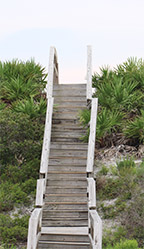
My friend Kelly* had extended a last-minute invite to my husband and I to take a vacation with her. She had rented a beautiful house in Florida on a quiet peninsula overlooking the bay on one side and the ocean on the other. We jumped at the opportunity!
 The days were spent idly watching sunrises and sunsets while looking for seashells and hermit crabs on the beautiful beach. When we ran out of supplies, we loaded up in the car for a 20-minute ride to the only grocery store for miles around.
It was the perfect vacation getaway, or so I thought.
Peaceful Sunsets, Ocean Breezes and a Spirited Awakening
 One morning during our stay, I felt a cool breeze blowing through the bedroom, which was odd as the fan was not on, and the windows were closed. The next thing I knew I found myself singing old church hymns. As I joined Kelly and my husband on the main level of the house, Kelly said, “Hey, can you take care of that?” I said, “What? You mean the ghosts?” She said, “Yeah. That.”
She had heard the church hymns too.
This was not Kelly’s first paranormal experience while hanging out with me. She and I had been roommates while attending college. During that time, she and my other roommate Angela* experienced all sorts of ghostly phenomena as I learned to adapt to my psychic gifts. There was one night in particular I will never forget when the ghostly image of an old man appeared on Kelly’s closet door. That same night, Angela felt like a ghost was grabbing her and pinning her to the wall of her room. At the same time, I saw what I thought was a ghost move through the hallway into the bathroom. I heard the toilet flush. That was enough to scare me. I stayed awake until morning.
The next day I asked the ghost what he wanted. He said we were noisy and wanted us out of “his” apartment. I agreed to keep the noise down if he would stop scaring my roommates, but I wasn’t moving as we lived there too.
The event marked my first experience communicating with a ghost.
Later, I researched the history of our apartment building and discovered it had once been an eldercare facility.
Florida: Where the Past Meets the Present
I was surprised that a new home along the Florida coast would have so much supernatural activity. Could it be pirates that wanted to lead me to buried treasure? Old church members that were not ready to go towards the light? I had no idea what to expect.
 I went into a meditative state to better understand what the ghosts wanted me to know. The answer to my questions could be found in the cemetery, they said.
Florida’s Lost City
So off we went to the “mainland.” When I saw a sign for a cemetery, I knew it was the one they wanted me to visit. We turned left and 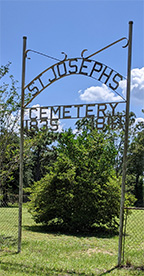 traveled for several miles then left again and drove on until the road came to a dead end. To the left was a simple iron gate which read: St. Joseph’s Cemetery 1835-1841.
Beyond the gate were a couple of paths, a historic marker, old gravestones and a few brick tombs. Across the road there was an open field dotted by trees. Despite appearances, the field did not “feel” empty.
As I stood there, I was overwhelmed with sadness and a sense of peace. In my head I heard the words, “Tell our story.”
It’s a Boomtown!
St. Joseph became a municipality in 1835 while under Spanish rule. In 1836, a railroad connected St. Joseph to other cities along the coast. St. Joseph was advertised as a “healthy climate offering fresh sea air,” prompting people to move there to escape the summer heat.
Soon St. Joseph had the largest population in the territory, with an estimated 6,000 residents. Because of the city’s charm, it was there in 1839 that a group of statesmen met to establish the Florida state constitution.
Crawford Sproul established the Calhoun Race Track a couple of miles outside of town, which brought in other elements: gambling and alcohol. “St. Joseph soon became known as a fast town! Some referred to it as “the wickedest place on earth,” Henry Drake wrote.
“In its heyday, St. Joseph was quite metropolitan in possessing a daily newspaper, two or more banks, churches, several hotels, a seminary, shipyard, cotton press, brickyard, grist mill, a board of trade, race track, and many business and professional people. The city promised soon to rival Charleston, Savannah, or New Orleans, both in grace and charm. It had the distinction of being the Gulf terminus of one of the first railways in the United States, and that alone gave it prominence equal to many Atlantic ports without such means of transportation.” – The Rise and Fall of Old St. Joseph, by Henry A. Drake, Atlanta, GA 1967
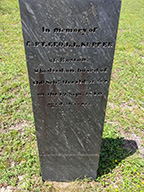 On September 18, 1840, Schooner Herald Captain George L.L. Kupfer died at sea of the yellow fever virus, which was transmitted by an infected mosquito, the Aedes Aegypti. Captain Kupfer was brought into the Port of St. Joe and buried at St. Joseph’s cemetery, where his gravestone remains today.
His death foreshadowed the tragedy ahead for the city of St. Joseph.
1841 Yellow Fever Epidemic Strikes the City
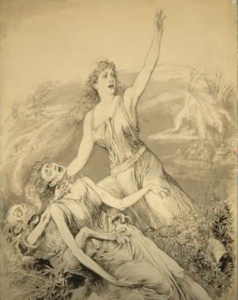 One year after Captain Kupfer’s death, yellow fever was brought to the Port of St. Joseph by an infected passenger aboard a cargo ship from Cuba. The ensuing epidemic gripped the city, indiscriminately killing thousands of people. “The illness spared no one – rich, poor, white, black, men, women, farmer, politician, child, elder.” People died so quickly they had to be buried in open pits at St. Joseph cemetery.
The numerous graves remain unmarked today.
Tragedy Strikes St. Joseph Again and Again
Those that did not die of the yellow fever in the summer of 1841 fled the city, leaving less than 500 residents in St. Joe when, on September 14, 1841, a severe storm destroyed a portion of the wharf. Other parts of the city were ravaged by fire. Three years later, on September 8, 1844, a hurricane struck and wiped out the region.
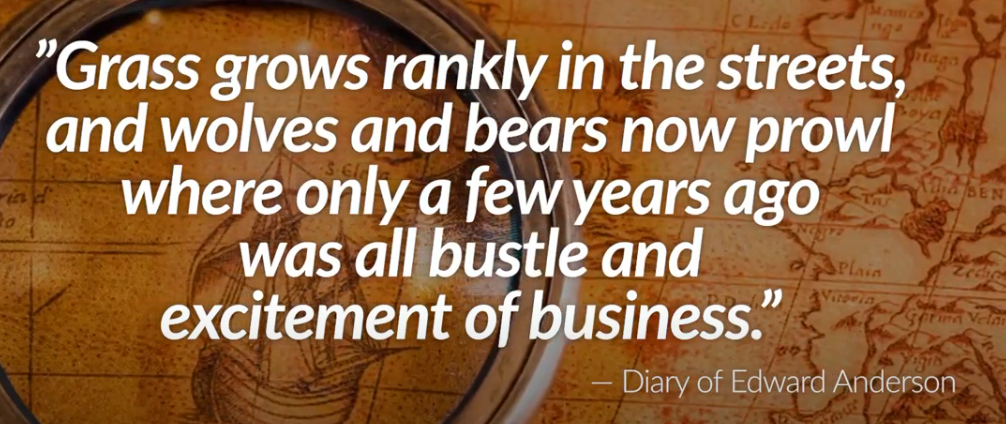
By 1854, the city was pretty much abandoned by all but a few people. By the time the Civil War began, a Confederate salt works was created in St. Joseph’s Bay.
 A Federal gun boat destroyed the salt works plant in 1862 as well as the remaining buildings of old St. Joseph. Real estate values collapsed, and the remaining residents left.
An Enduring Message from the Past
As I stood in the cemetery that day surrounded by the graves of those who lost their lives to an epidemic, I couldn’t help but compare what happened to them to today’s covid pandemic. It was at that moment of reflection I heard a voice say: “We want you to know who we were and how we lived. You are lucky to have what you need to combat an epidemic. We were not so lucky.”
*Names changed to protect privacy.